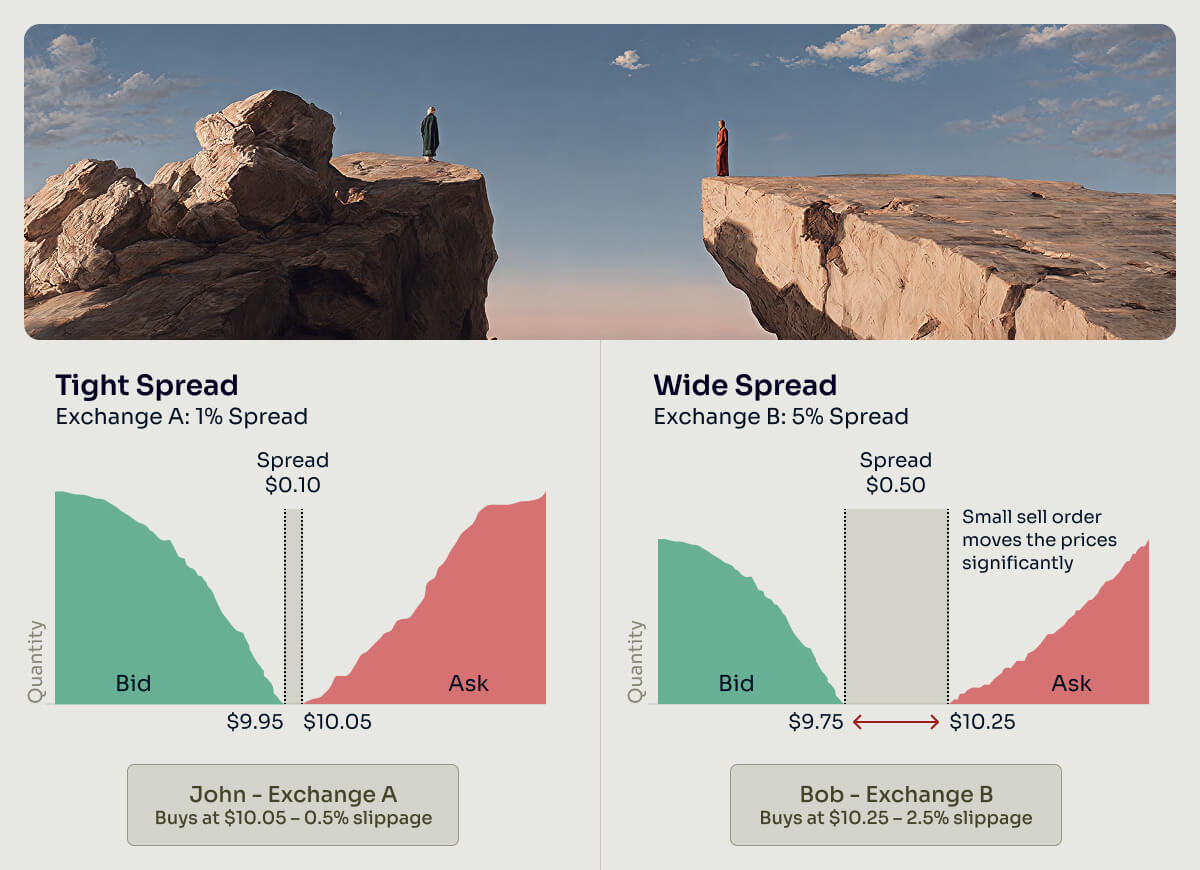
The bid-ask spread is the difference between the highest price a buyer is willing to pay (bid) and the lowest price a seller is willing to accept (ask). A narrower spread indicates a more liquid market where transactions occur at prices closer to fair value. Wide spreads make trading expensive and discourage participation.
Consider this example: John and Bob both want to buy tokens when the CoinGecko price reaches $10. John logs into Exchange A (1% spread) and can buy at $10.05 — a 0.5% slippage. Bob logs into Exchange B (5% spread) and sees $10.25 — a 2.5% slippage. John is far more likely to transact. Tight spreads create the conditions for higher trade volume and healthier secondary markets.