- Capital intensity: Requires meaningful stablecoin allocation that may strain project treasury.
- Operational dependency: Liquidity quality depends on the market maker's sophistication and discipline.
- Asset mismanagement risk: Poor execution can deplete trading capital, particularly in volatile or declining markets.
- Limited downside protection: Losses on the Trading Capital Deposit are typically borne by the project, not the market maker.
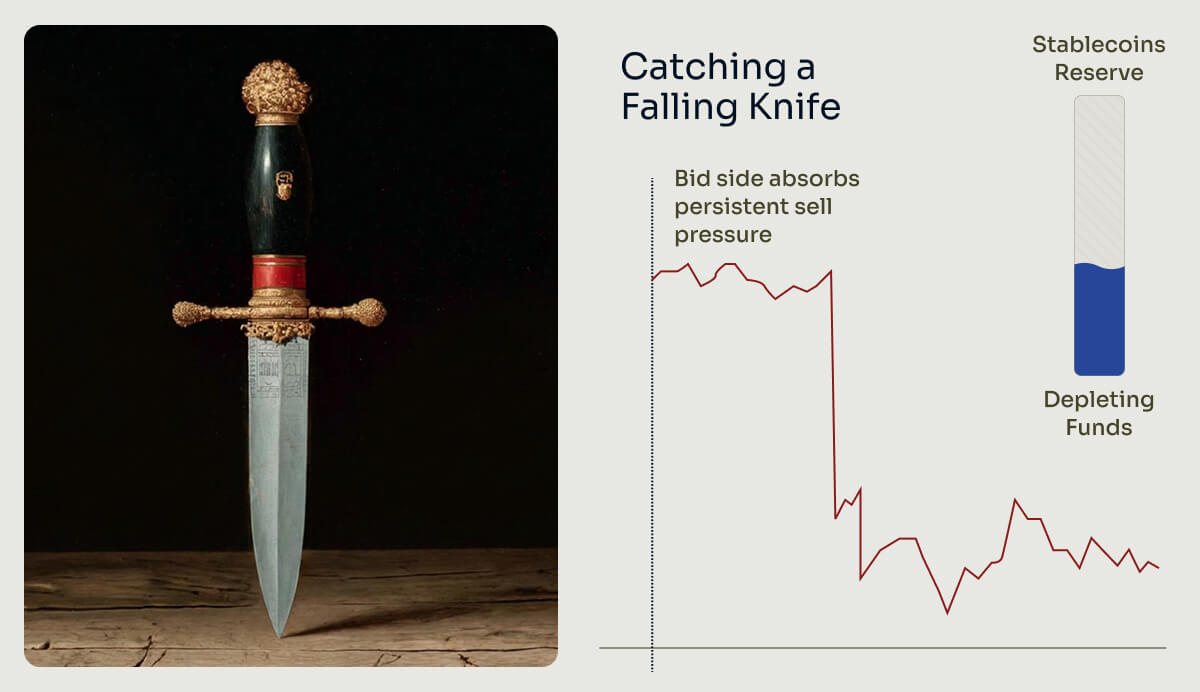
- "Catching a falling knife" risk: During macro downturns or aggressive sell-offs, the market maker maintains deep bid-side liquidity as part of its mandate. This means the working capital absorbs sell pressure by converting stablecoins into depreciating tokens, creating significant portfolio skew and potentially depleting the stablecoin reserve.
- Attention risk without profit sharing: Market makers that do not participate in profit sharing may allocate minimal discretionary attention to your project, as they are likely servicing hundreds of projects simultaneously on a flat-fee basis.