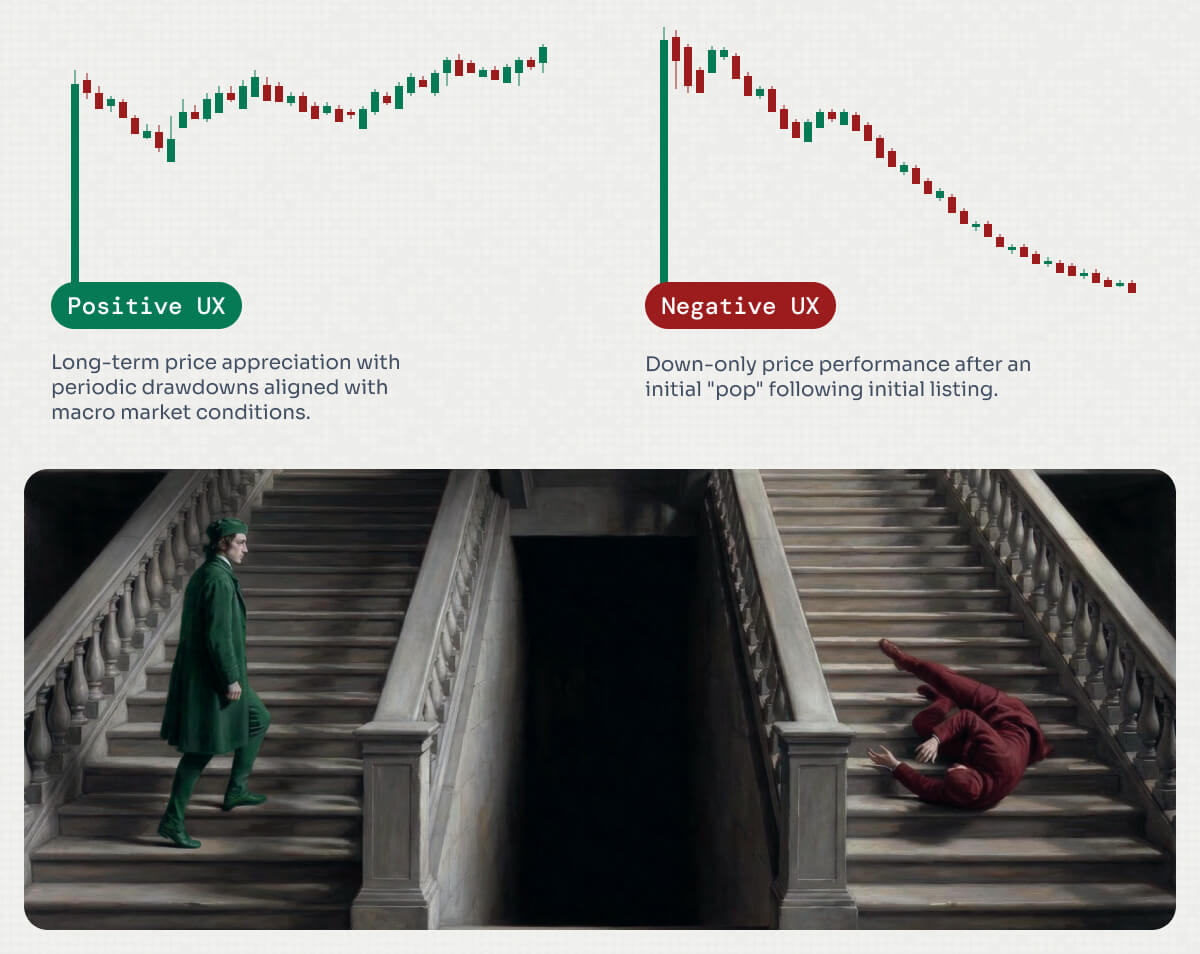
A sustained price decline doesn't just affect traders, it triggers a cascade that progressively undermines every layer of your project's ecosystem. Understanding this cascade is essential because the damage is not linear; it is reflexive, meaning each stage makes the next one worse.
| Stage | What Happens | Observable Signal |
|---|---|---|
| 1. Price Decline | Token-denominated incentives lose USD value. | Staking APY looks high in token terms, but USD yield drops significantly. |
| 2. Incentive Erosion | Contributors and users exit for better opportunities. | Discord activity drops, governance participation falls, grant applicants decline. |
| 3. Liquidity Drain | LPs withdraw capital, market makers reduce depth. | Wider bid-ask spreads, more slippage on trades, smaller order book depth. |
| 4. Narrative Collapse | Project perceived as "dead" regardless of actual development. | Social mentions shift negative, KOL coverage stops, media interest disappears. |
| 5. Recovery Becomes Exponentially Harder | Each cycle of decline requires disproportionately more capital and effort to reverse. | Cost-per-user acquisition increases dramatically, partnership negotiations stall. |
Some price decline is normal, healthy markets experience periodic drawdowns, and no token appreciates indefinitely. The distinction is between periodic pullbacks within an upward trend (healthy) and sustained, multi-month decline (structural). Structural decline is what triggers the cascade above.
The key takeaway for founders; you cannot "out-ship" a death spiral. Building great technology while your token price declines does not automatically reverse the cascade. Arresting a spiral requires active demand-side intervention, activating demand drivers, adjusting emission timing, securing institutional buy-side commitments, or restructuring incentives to rebuild holding conviction. Product development matters, but demand engineering is what stops the bleeding.