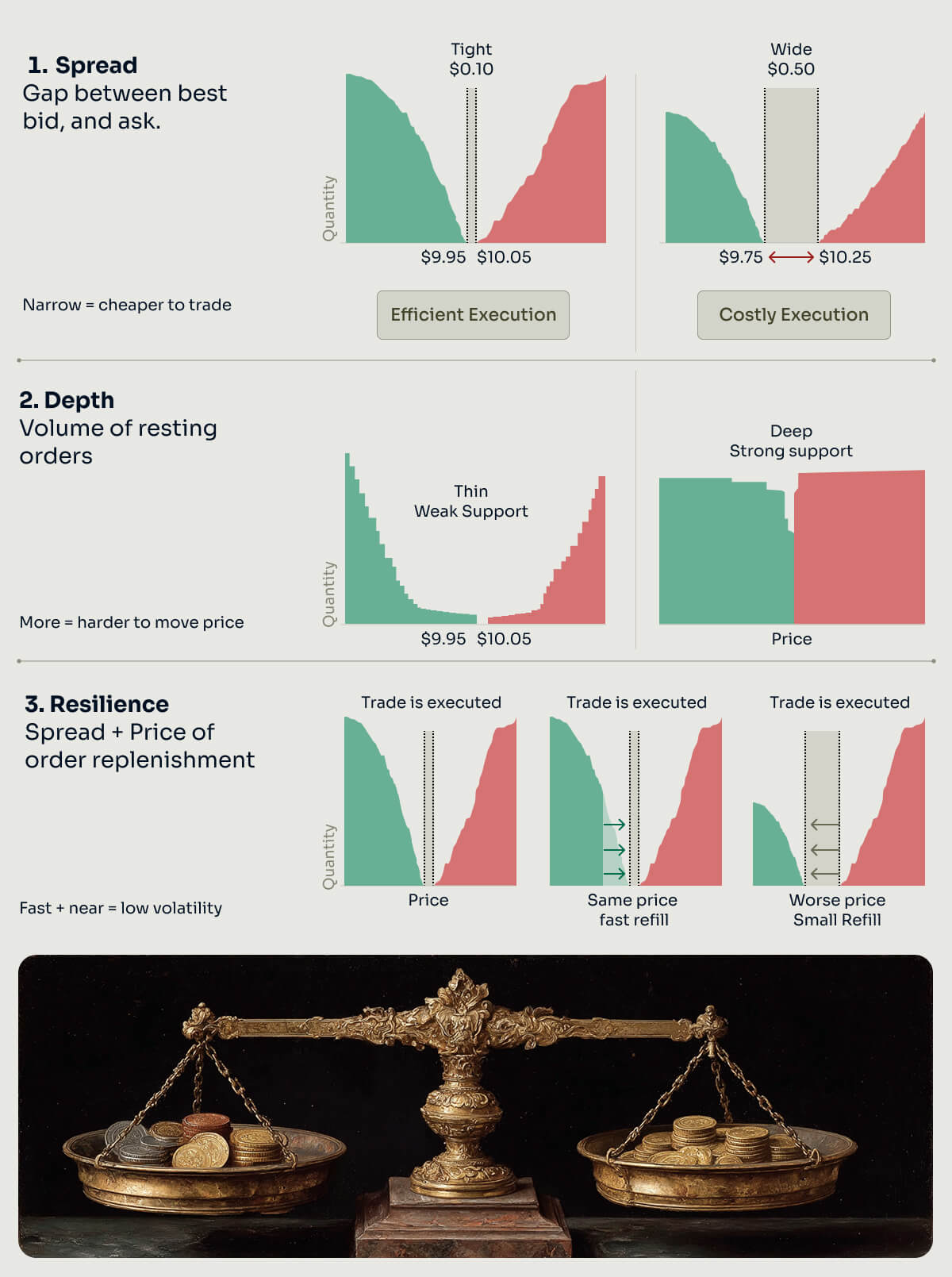
Liquidity can be measured through three distinct dimensions: Spreads, depth, and resilience. Each is explained below:
- Spreads: The bid-ask spread is the difference between the highest price a buyer is willing to pay (bid) and the lowest price a seller is willing to accept (ask). A tight spread indicates a more liquid market, meaning transactions can occur more quickly and at prices closer to the market rate.
- Depth: Depth represents the cumulative amount of willing buyers and willing sellers on either side of the market. The greater the amount of buyers means more "bid-side liquidity" whereas the greater amount of sellers means more "liquidity on offer".
- Resilience: Resilience refers to the speed, rate, and prices at which depth is replenished once orders are executed against. Highly resilient liquidity replenishes quickly, at similar prices at which it was filled, while liquidity with low resilience tends to replenish slowly at prices far from which it was filled. For example, highly resilient bid-side liquidity means that patient buyers will resubmit orders to buy your token at the same prices that sellers have recently traded against, effectively serving as "resistance" (i.e., a buy-wall) against aggressive sellers. In contrast, low resilience bid-side liquidity means that patient buyers might only resubmit orders to buy your token at aggressive discounts once sellers begin to aggressively unload. In general, high resilience liquidity will lead to low volatility, while low resilience liquidity will cause massive swings in token price.